|
|
第九届CMHL船舶与海洋工程计算水动力学国际研讨会
The 9th Symposium on Computational Marine Hydrodynamics
(The 9th CMHL Symposium, 2026)
会议时间:2026年1月18日9:00-18:35
Meeting Time: 9:00 a.m. – 6:35 p.m., January 18, 2026
会议地点:上海交通大学闵行校区木兰船建大楼B208会议室
Meeting Venue: Conference Room B208, Ruth Mulan Chu Chao Building (Mulan Building), Minhang Campus, Shanghai Jiao Tong University
会议形式:线下和线上相结合
Meeting Format: Hybrid (in-person & online)
主办单位
上海交大船海计算水动力学研究中心
Computational Marine Hydrodynamics Lab(CMHL)

协办单位
《Journal of Hydrodynamics》杂志社(JHD)
深海技术科学太湖实验室(TaiHu Laboratory)
中国船舶科学研究中心(CSSRC)
宁波大学海运学院(Ningbo University Faculty of Maritime and Transportation)

赞助单位
曙光智算信息技术有限公司(Sugon)

第九届CMHL船舶与海洋工程计算水动力学国际研讨会(简称:第九届CMHL国际研讨会)是庆祝上海交大船舶与海洋工程计算水动力学研究中心(CMHL)成立20周年暨上海交通大学建校130周年而专门举办的学术庆典活动。
The 9th International Symposium on Computational Hydrodynamics in Marine and Ocean Engineering (abbreviated as the 9th CMHL International Symposium) is a special academic celebration held to mark the 20th anniversary of the establishment of the Center for Computational Hydrodynamics in Marine and Ocean Engineering (CMHL) at Shanghai Jiao Tong University and the 130th anniversary of the university’s founding.


1. 会议简介(Introduction of the 9th CMHL Symposium)
CMHL船舶与海洋工程计算水动力学国际研讨会(简称:CMHL国际研讨会)是以上海交大 CMHL研究中心名字命名的学术研讨会,主要围绕船海计算水动力学的先进计算方法、软件开发、工程问题仿真与应用等主题进行研讨,每年召开一次,第一届CMHL国际研讨会2018年在上海召开。
The CMHL Symposium on Computational Marine Hydrodynamics (referred to as the CMHL Symposium) is an academic conference named after the CMHL Research Center of Shanghai Jiao Tong University. It primarily focuses on advanced computational methods, software development, and the simulation and application of engineering problems in the field of computational hydrodynamics for ships and offshore structures. The symposium is held annually, with the first CMHL Symposium was held in 2018 in Shanghai.
第九届CMHL国际研讨会(The 9th CMHL Symposium, 2026),将于2026年1月18日9:00-18:35,通过线下和线上相结合的形式召开。本次会议由上海交大船海计算水动力学研究中心(CMHL)主办,《Journal of Hydrodynamics》杂志社、深海技术科学太湖实验室、中国船舶科学研究中心、水动力学全国重点实验室和宁波大学海运学院联合协办,并得到曙光智算信息技术有限公司的赞助支持。
The coming 9th CMHL Symposium 2026 organized by CMHL and co-organized with Journal of Hydrodynamics(JHD), Taihu Laboratory of Deepsea Technological Science, China Ship Scientific Research Center(CSSRC), National Key Laboratory of Hydrodynamics of China, as well as Ningbo University Faculty of Maritime and Transportation will be taken place via mixed webinar and in-person meeting on Jan. 18, 2026, from 9:00AM to 6:35 PM. It is appreciated to have the sponsorship support of Sugon for the 9th CMHL Symposium.
第九届CMHL国际研讨会邀请了美国爱荷华大学的Frederick Stern教授、韩国首尔国立大学的Yonghwan Kim教授2位船海CFD领域的国际著名专家作1小时大会主旨报告。会议还邀请了《Ocean Engineering》杂志主编、英国南安普顿大学Tahsin Tezdogan教授、意大利国家海洋工程研究所的Matteo Diez高级研究员、哈尔滨工程大学的王超教授、宁波大学的束亚清教授、中国船舶科学研究中心的曾柯高级工程师、英国思克莱德大学的黄扬博士以及上海交通大学船海计算水动力学研究中心 (CMHL) 的王建华副研究员等6位知名专家和优秀青年学者作45分钟特邀报告。
The 9th CMHL Symposium invited three world-renowned experts in the field of CFD—Professor Frederick Stern from the University of Iowa (USA), Professor Yonghwan Kim from Seoul National University (South Korea)—to deliver 1-hour plenary lectures.The symposium also invited six distinguished experts and outstanding young scholars to give 45-minute keynote presentations, including Professor Tahsin Tezdogan from the University of Southampton (UK) and Editor-in-Chief of Ocean Engineering; Senior Researcher Matteo Diez from the Italian National Institute of Ocean Engineering; Professor Wang Chao from Harbin Engineering University; Professor Shu Yaqing from Ningbo University; Senior Engineer Zeng Ke from China Ship Scientific Research Center; Research Associate Huang Yang from University of Strathclyde and Associate Professor Wang Jianhua from the SJTU Computational Marine Hydrodynamics Lab (CMHL) .
第九届CMHL国际研讨会聚焦船海工程计算水动力学的热点问题,涉及船舶湍流精细化分析、高性能船舶机动性能分析、实尺度船舶计算、高效降维优化方法、船-桨-舵耦合动态失稳、真实海况下船舶操纵与自主导航等高保真CFD模拟方法与应用、极地船舶航行路径规划、极地船舶快速性、近场动力学在数值计算冰载荷中的应用等精彩内容,将会系统展示船海工程CFD方法和软件的最新研究与应用进展,以及未来发展趋势,为与会者激发创新思维和深度洞察船海工程计算水动力学的前沿发展提供宝贵学习和交流机会。
Focusing on the cutting-edge issues in computational hydrodynamics for naval architecture and marine engineering, the 9th CMHL Symposium covers a diverse range of exciting topics: high-fidelity CFD simulation methods and applications such as refined turbulent flow analysis of ships, maneuverability analysis of high-performance vessels, full-scale ship computations, efficient dimension reduction optimization methods, coupled dynamic instability of ship-propeller-rudder systems, and ship maneuvering and autonomous navigation under real sea conditions; as well as polar ship navigation route planning, polar ship rapidity, and the application of peridynamics in numerical calculation of ice loads. The symposium will systematically showcase the latest research and application progress, along with future development trends, of CFD methods and software in naval architecture and marine engineering, providing valuable opportunities for participants to stimulate innovative thinking and gain in-depth insights into the frontier development of computational hydrodynamics in this field.
2. 会议主席(Chair of the 9th CMHL Symposium)
Prof. Decheng Wan, CMHL, Shanghai Jiao Tong University, China
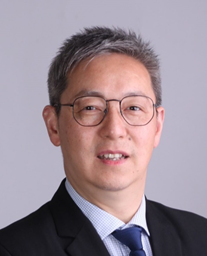 万德成,上海交通大学船舶与海洋工程计算水动力学研究中心(CMHL)主任和创始人,国际海洋与极地工程学会(ISOPE)主席,国际船模拖曳水池会议(ITTC)顾问委员会委员,国际船舶CFD会议(CFD Workshop in Ship Hydrodynamics)指导委员会委员,国际船舶与海洋工程水动力学会议(IWSH)执委会主席,全国船舶与海洋工程CFD会议执委会主席等。入选美国斯坦福大学发布的世界排名前2%科学家「终身影响力」和「年度影响力」榜单,爱思唯尔发布的全球高被引中国学者,ScholarGPS发布的全球前0.05%顶尖学者榜单,中国知网发布的“高被引学者TOP1%”榜单。荣获“周培源水动力学奖”一等奖,国际海洋工程CH Kim学者奖、国际海洋与极地工程学会奖、国际Moan-Faltinsen最佳论文奖、中国科协优秀科技论文奖等。 万德成,上海交通大学船舶与海洋工程计算水动力学研究中心(CMHL)主任和创始人,国际海洋与极地工程学会(ISOPE)主席,国际船模拖曳水池会议(ITTC)顾问委员会委员,国际船舶CFD会议(CFD Workshop in Ship Hydrodynamics)指导委员会委员,国际船舶与海洋工程水动力学会议(IWSH)执委会主席,全国船舶与海洋工程CFD会议执委会主席等。入选美国斯坦福大学发布的世界排名前2%科学家「终身影响力」和「年度影响力」榜单,爱思唯尔发布的全球高被引中国学者,ScholarGPS发布的全球前0.05%顶尖学者榜单,中国知网发布的“高被引学者TOP1%”榜单。荣获“周培源水动力学奖”一等奖,国际海洋工程CH Kim学者奖、国际海洋与极地工程学会奖、国际Moan-Faltinsen最佳论文奖、中国科协优秀科技论文奖等。
Prof. Decheng Wan is Director and Founder of Computational Marine Hydrodynamics Laboratory (CMHL) at Shanghai Jiao Tong University, President of International Society of Offshore and Polar Engineers (ISOPE), Advisor committee member of International Towing Tank Conference (ITTC), Steering committee member of CFD Workshop in Ship Hydrodynamics, President of the Executive Committee of the International Workshop on Ship and Marine Hydrodynamics (IWSH), and as President of the Executive Committee of the National Conference of Marine Computational Fluid Dynamics. Recognized as one of the world's top 2% most influential scientists (both for career-long and single-year impact) by Stanford University, Prof. Wan has been named a Highly Cited Chinese Researcher by Elsevier, ranked among the top 0.05% global scholars by ScholarGPS, and listed in the Top 1% Highly Cited Chinese Scholars by CNKI. Prof. Wan's accolades include the Prof. Peiyuan Zhou’s First Award of Hydrodynamics, CH Kim Award, ISOPE Award, the Moan-Faltinsen Best Paper Award, and the Outstanding Scientific Paper Award from the China Association for Science and Technology.
3. 会议时间(Time of the 9th CMHL Symposium)
09:00-18:35 (GMT+8, Beijing time) of Jan. 18, 2026
4. 日程安排(Program of the 9th CMHL Symposium)
会议手册下载: 第九届CMHL船舶与海洋工程计算水动力学研讨会
Program for download:The 9th CMHL Symposium, 2026
5. 参与方式(In-Person Meeting Information and Online Webinar Meeting Information)
The 9th international CMHL Symposium will be taken place both in-person and online (webinar meeting) on Jan. 18, 2026. It will also be live on Bilibili, KouShare, and Fangzhenxiu websites.
In-person Meeting
The in-person meeting venue is set up at Room No. B208 in Ruth Mulan Chu Chao Building (Mulan Building) of Shanghai Jiao Tong University, Dongchuan Road 800, Shanghai 200240, China. If you wish to attend in person, please register via email with the conference secretary Dr. Cao Liushuai by January 15, 2026.
Email: liushuaicao@sjtu.edu.cn
Tencent Meeting
Tencent Meeting Webinar (ID: 888-231-369) has been set up for the online virtual meeting of the 9th CMHL Symposium 2026 during 09:00-18:50 (GMT+8, Beijing time) of Jan. 18, 2026. You can scan the following QR code or click the following link to join in the Webinar 30 minutes early as planned.
Live Broadcast
We also prepare three live broadcasts of the 9th CMHL Symposium 2026 on the Bilibili website, KouShare website and Fangzhenxiu website. In case the above Tencent Meeting room are full and you cannot join in, you can watch the live stream online via the following QR code or links:
Bilibili Link: http://live.bilibili.com/24017914

6. 特邀报告人及报告内容介绍(Invited speaker and presentation of the report)
Plenary Lecture 1 9:10-10:10
Computational Study of Dynamic Instability for High-Speed Planning Hull Maneuvers in Calm Water
Prof. Frederick Stern, The University of Iowa, USA.
Brief CV of Invited Speaker:
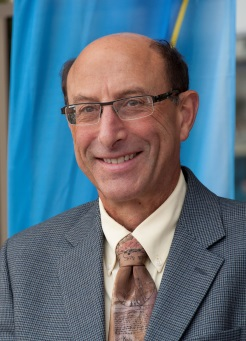 Prof. Frederick Stern is an expert in experimental/ computational ship hydrodynamics following an integrated approach: experiments guided by simulations provide validation data and simulations fill in sparse data. Iowa towing tank/wave basin data are used for physics, CFD validation, and test cases for CFD workshops and NATO AVT working groups. CFDShip-Iowa URANS/DES is one of the best codes at CFD workshops since 1994 with many functionalities. Next generation high-fidelity/ resolution V6 enables two-phase sharp-interface DNS/LES utilizing billions of grid points. Research includes V&V and UQ methods, fundamental physics, ship performance, and Digital Design, which combines big and sparse data, ML&AI, multi-disciplinary optimization/fluid-structure interaction, and virtual trials. Research supported by grants totaling nearly $50M. Authored, co-authored, or edited: 9 international conference proceedings/books; 11 book chapters; 5 committee reports and 12 Quality Manual Procedures for the 21st–25th International Towing Tank Conference; 44 NATO AVT final report chapters; 222 journal articles; 4 moderate review journal articles; 2 online archive articles; 311 conference proceeding papers, and 51 reports. Taught mechanical engineering courses at all levels; currently focusing on intermediate fluid mechanics, viscous flow, and turbulent flow courses. Supervised 30 Ph.D. and 25 M.S. theses to completion. Prof. Frederick Stern is an expert in experimental/ computational ship hydrodynamics following an integrated approach: experiments guided by simulations provide validation data and simulations fill in sparse data. Iowa towing tank/wave basin data are used for physics, CFD validation, and test cases for CFD workshops and NATO AVT working groups. CFDShip-Iowa URANS/DES is one of the best codes at CFD workshops since 1994 with many functionalities. Next generation high-fidelity/ resolution V6 enables two-phase sharp-interface DNS/LES utilizing billions of grid points. Research includes V&V and UQ methods, fundamental physics, ship performance, and Digital Design, which combines big and sparse data, ML&AI, multi-disciplinary optimization/fluid-structure interaction, and virtual trials. Research supported by grants totaling nearly $50M. Authored, co-authored, or edited: 9 international conference proceedings/books; 11 book chapters; 5 committee reports and 12 Quality Manual Procedures for the 21st–25th International Towing Tank Conference; 44 NATO AVT final report chapters; 222 journal articles; 4 moderate review journal articles; 2 online archive articles; 311 conference proceeding papers, and 51 reports. Taught mechanical engineering courses at all levels; currently focusing on intermediate fluid mechanics, viscous flow, and turbulent flow courses. Supervised 30 Ph.D. and 25 M.S. theses to completion.
Abstract:
This study investigates dynamic instabilities during turning maneuvers of a high-speed planning hull using computational simulations, including turning circles, quick turn, and avoidance line tests. A Generic Prismatic Planning Hull (GPPH) model is used for the simulations. Relevant performance criteria and dynamic instabilities reported in the literature are summarized and applied to assess the turning maneuvers of the GPPH. Turning circles are analyzed based on circular motion equations and force and moment balances. Instabilities are identified through animation analysis and time histories of motion and acceleration quantities. The maneuvering boat speed is determined in the quick-turn tests, while the performance in the avoidance line test is evaluated under various settings.
Co-Authors: Zhaoyuan Wang, Deniz Ozturk, Christian Milano, Yugo Sanada, Andrew Gunderson, John Scherer, Hironori Yasukawa, Matteo Diez, Eric R. Kubina
Plenary Lecture 2 10:10-11:10 (Jan.18, 11:10-12:10 Korea Time)
CFD as a Tool for the Prediction of Ship Hydrodynamic Performance
Prof. Yonghwan Kim, Seoul National University, Korea.
Brief CV of Invited Speaker:
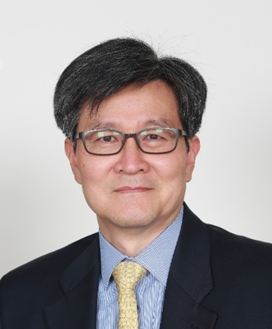 Dr. Yonghwan Kim is a professor of Seoul National University(SNU). He also serves as the Director of Lloyd’s Register Foundation Research Center in SNU. He got BS and MS degrees at Seoul National University, and PhD degree at Massachusetts Institute of Technology(MIT). He worked at MIT, American Bureau of Shipping, and Daewoo Shipbuilding Co. His major research interests are seakeeping, sloshing, computational-based and digital-based analysis, and he published about 150 journal papers. He was a distinguished visiting fellow of the Royal Academy of Engineering and University of Southampton, and a specially-appointed professor of Osaka University. He is a full member of the Korean National Academy of Engineering and a fellow of SNAME and RINA. Currently, he is the representative of the South and East Asia of ITTC and the Editor-in-Chief of the Journal of Engineering for Maritime Environment. He is also a co-chair of the International Workshop on Water Waves and Floating Bodies. He got a Young Engineer Award from the Korean National Academy of Engineering, and an Achievement Award and Academic Awards from the Korean Society of Ocean Engineers. He was named as the 44th Weinblum Memorial Lecturer in 2023 and the Kenneth Davidson Medalist of SNAME in 2024. Dr. Yonghwan Kim is a professor of Seoul National University(SNU). He also serves as the Director of Lloyd’s Register Foundation Research Center in SNU. He got BS and MS degrees at Seoul National University, and PhD degree at Massachusetts Institute of Technology(MIT). He worked at MIT, American Bureau of Shipping, and Daewoo Shipbuilding Co. His major research interests are seakeeping, sloshing, computational-based and digital-based analysis, and he published about 150 journal papers. He was a distinguished visiting fellow of the Royal Academy of Engineering and University of Southampton, and a specially-appointed professor of Osaka University. He is a full member of the Korean National Academy of Engineering and a fellow of SNAME and RINA. Currently, he is the representative of the South and East Asia of ITTC and the Editor-in-Chief of the Journal of Engineering for Maritime Environment. He is also a co-chair of the International Workshop on Water Waves and Floating Bodies. He got a Young Engineer Award from the Korean National Academy of Engineering, and an Achievement Award and Academic Awards from the Korean Society of Ocean Engineers. He was named as the 44th Weinblum Memorial Lecturer in 2023 and the Kenneth Davidson Medalist of SNAME in 2024.
Abstract:
Today, computational fluid dynamics (CFD) has become an important performance analysis tool for the design of ships and offshore structures. While CFD calculations previously required extensive hardware and software resources, significantly more computational resources are now available. For ship hydrodynamic problems, CFD was until recently used as a validation or alternative prediction method for calm-water towing tank tests. However, it is now expanding to seakeeping and maneuvering problems, which require significantly more computational resources. Many of such problems that have recently attracted significant attention are challenging to analyze, as they involve fully nonlinear phenomena or involve complex coupling of multiple problems, beyond the scope of linear theories or limited theories that simplify physical phenomena. CFD is currently the optimal tool for analyzing these problems.
This presentation presents examples of the application of CFD to several representative ship hydrodynamic problems of current interest in the field of naval architecture, drawn from recent research conducted by the Marine Hydrodynamics Laboratory at Seoul National University. The presentation covers:
- Seakeeping analysis for ships and planning boats in calm-water and wave conditions.
- Numerical PMM tests in calm-water and wave conditions
- Free-running maneuvering tests in waves
- Real-ship resistance at different drafts
Numerical calculations were performed using the snuMHLFoam, OpenFoam- based in-house code of SNU, and a commercial software. Representative results for each problem and validation through comparison with experimental data are presented. The results clearly demonstrate that CFD can be an alternative method for predicting ship hydrodynamic performance.
Keynote Presentation 1 11:10-11:55
Flow Field Analysis of Ship Turbulent Wake Flows and Air-Mixed Wake Flows
Dr. Jianhua Wang, Associate Professor, Computational Marine Hydrodynamics Laboratory (CMHL), Shanghai Jiao Tong University, China
Brief CV of Invited Speaker:
 Dr. Jianhua Wang is an associate professor and doctoral supervisor at CMHL, School of Ocean and Civil Engineering, Shanghai Jiao Tong University. He graduates from Tianjin University with a bachelor degree in 2013 and earned his doctoral degree from Shanghai Jiao Tong University in 2018. His research focuses on the development of numerical methods in ship hydrodynamics, i.e., overset grid method for complex motions, Euler-Euler models for ship air-layer flows, two-way coupled CFD-FEM methods, and the application of these methods in developing CAE software to solve engineering problems in the field of ship hydrodynamics. He has published over 50 academic papers in peer-reviewed journals, including Journal of Ship Research, Physics of Fluids, International Journal of Multiphase Flow, Ocean Engineering, etc. Dr. Wang has received several academic awards, including the 2017 OpenFOAM Workshop "Best Presentation Award," the 2020 Moan-Faltinsen "Best Paper Award," and the 2021 High Citation Award from the Journal of Hydrodynamics. He serves on the editorial boards of the Journal of Hydrodynamics and Chinese Journal of Ship Research. Additionally, he is a TPC member of ISOPE and secretary general of the executive committee of national marine CFD conference. Dr. Jianhua Wang is an associate professor and doctoral supervisor at CMHL, School of Ocean and Civil Engineering, Shanghai Jiao Tong University. He graduates from Tianjin University with a bachelor degree in 2013 and earned his doctoral degree from Shanghai Jiao Tong University in 2018. His research focuses on the development of numerical methods in ship hydrodynamics, i.e., overset grid method for complex motions, Euler-Euler models for ship air-layer flows, two-way coupled CFD-FEM methods, and the application of these methods in developing CAE software to solve engineering problems in the field of ship hydrodynamics. He has published over 50 academic papers in peer-reviewed journals, including Journal of Ship Research, Physics of Fluids, International Journal of Multiphase Flow, Ocean Engineering, etc. Dr. Wang has received several academic awards, including the 2017 OpenFOAM Workshop "Best Presentation Award," the 2020 Moan-Faltinsen "Best Paper Award," and the 2021 High Citation Award from the Journal of Hydrodynamics. He serves on the editorial boards of the Journal of Hydrodynamics and Chinese Journal of Ship Research. Additionally, he is a TPC member of ISOPE and secretary general of the executive committee of national marine CFD conference.
Abstract:
Ship wake flows are critically important for hydrodynamic performance, particularly in ship resistance and propulsion. These turbulent wakes exhibit strong nonlinear behaviors, including vortex shedding and multi-scale vortex interactions. Free surface effects further complicate the flow physics. When air mixes into the wake, the vortical structures become even more complex. In order to better understand the physics of wake flows, it is quite important to find an appropriate approach to simulate and analyze the complex turbulent wake flows and air-mixed turbulent wake flows. In this presentation, the literatures related to the wake flow studies and the vortical structure analysis will be introduced firstly. Then, the numerical methods including DDES, Euler-Euler model, vortical structure analysis methods will be presented. Following the numerical approaches, a benchmark case of JBC turbulent wake and the air-mixed turbulent wake of VLCC model with air-layer drag reduction equipment will be illustrated in detail. Energy-based approach (modeled and resolved TKE), spectral analyses (temporal and spatial), scale-ratio approaches, etc. are used to analyze the turbulent wake flows. The influence of the air-mixed flow on the ship wake will also be discussed.
Keynote Presentation 2 13:00-13:45
From Complexity to Efficiency: Cutting Through the Curse of Dimensionality in Hydrodynamic Shape Optimization
Dr. Matteo Diez, Senior Research Scientist, CNR-INM, National Research Council-Institute of Marine Engineering, Rome, Italy
Brief CV of Invited Speaker:
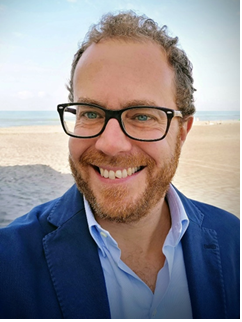 Matteo Diez is Research Director at CNR-INM, National Research Council-Institute of Marine Engineering, Rome, Italy, where he leads a research group in multidisciplinary analysis and optimization. His research focuses on simulation-based design optimization methodologies, aiming at the affordable use of high-fidelity prime-principle based solvers in ship hydrodynamics and fluid structure interaction for both deterministic and stochastic applications. He is author of more than 100 papers published in peer-reviewed international journals (including Computer Methods in Applied Mechanics and Engineering, Engineering with Computers, Ocean Engineering, Structural Multidisciplinary Optimization, Marine Structures, Applied Soft Computing, ASME Journal of Verification, Validation and Uncertainty Quantification) and international conference proceedings. He is Editorial Board Member at Nature Portfolio‘s Scientific Reports. He has been Adjunct Professor at the Università Iuav di Venezia, Università degli Studi Roma Tre, and the Istituto Nazionale di Architettura, IN/ARCH. He has been Visiting Research Scholar at the University of Iowa under ONR support. He has been co-chair and technical team member of several activities on deterministic and stochastic optimization for vehicle design within NATO Science and Technology Organization Applied Vehicle Technology Panel. He has been principal investigator of ONR-funded NICOP (Naval International Cooperative Opportunities in Science and Technology Program) grants. He received his M.Sc. degree in Mechanical Engineering from Università degli Studi Roma Tre in 2003 and his Ph.D. degree in Mechanical and Industrial Engineering from the same University in 2007, with a thesis on multidisciplinary optimization methods for conceptual aircraft design. Matteo Diez is Research Director at CNR-INM, National Research Council-Institute of Marine Engineering, Rome, Italy, where he leads a research group in multidisciplinary analysis and optimization. His research focuses on simulation-based design optimization methodologies, aiming at the affordable use of high-fidelity prime-principle based solvers in ship hydrodynamics and fluid structure interaction for both deterministic and stochastic applications. He is author of more than 100 papers published in peer-reviewed international journals (including Computer Methods in Applied Mechanics and Engineering, Engineering with Computers, Ocean Engineering, Structural Multidisciplinary Optimization, Marine Structures, Applied Soft Computing, ASME Journal of Verification, Validation and Uncertainty Quantification) and international conference proceedings. He is Editorial Board Member at Nature Portfolio‘s Scientific Reports. He has been Adjunct Professor at the Università Iuav di Venezia, Università degli Studi Roma Tre, and the Istituto Nazionale di Architettura, IN/ARCH. He has been Visiting Research Scholar at the University of Iowa under ONR support. He has been co-chair and technical team member of several activities on deterministic and stochastic optimization for vehicle design within NATO Science and Technology Organization Applied Vehicle Technology Panel. He has been principal investigator of ONR-funded NICOP (Naval International Cooperative Opportunities in Science and Technology Program) grants. He received his M.Sc. degree in Mechanical Engineering from Università degli Studi Roma Tre in 2003 and his Ph.D. degree in Mechanical and Industrial Engineering from the same University in 2007, with a thesis on multidisciplinary optimization methods for conceptual aircraft design.
Abstract:
High-fidelity hydrodynamic shape optimization is frequently bottlenecked by the “curse of dimensionality,” where the growth of design parameters makes thorough exploration of the solution space computationally prohibitive. This talk addresses this critical challenge by discussing a novel framework for design space dimensionality reduction that bridges the gap between statistical efficiency and engineering applicability. To overcome the limitations of traditional techniques like Principal Component Analysis (PCA), which often lack invertibility to the original design space, we first introduce the Parametric Model Embedding (PME) framework. PME uniquely addresses the “pre-image problem” by explicitly embedding the original design variables into the reduction process. By solving a generalized eigenvalue problem on an augmented matrix of shape deformations and design parameters, PME constructs a reduced space that retains an analytical backmapping to the original CAD parameters. This ensures that any point in the latent space can be directly reconstructed into a feasible geometry, bridging the gap between abstract statistical reduction and practical design interpretability. Building on this foundation, we present two physics-aware extensions: Physics-Informed and Physics-Driven Parametric Model Embedding (PI-PME and PD-PME). These methods enrich the embedding by incorporating physical information, ranging from lumped coefficients (e.g., resistance or motion root mean square) to distributed field data (e.g., pressure distribution), derived from low-fidelity simulations. PI-PME combines geometric and physical variability to identify high-potential configurations, while PD-PME constructs the latent space solely from physical responses, effectively filtering the design domain based on performance rather than geometric variance. The presentation will demonstrate how these frameworks empower global and multi-objective optimization for complex marine systems, such as surface ship hulls and propellers, and underwater gliders. By generating physically relevant reduced spaces, these methods enable the efficient construction of surrogate models and the rapid visualization of design trade-offs. This approach transforms the design process, allowing naval architects to perform extensive global searches and identify Pareto-optimal solutions with significantly reduced computational costs.
Keywords
Hydrodynamic Shape Optimization, Parametric Model Embedding, Dimensionality Reduction, Global Optimization, Multi-Objective Optimization.
References
D’Agostino, D., Serani, A. and Diez, M., 2020. Design-space assessment and dimensionality reduction: An off-line method for shape reparameterization in simulation-based optimization. Ocean Engineering, 197, p.106852.
Serani, A. and Diez, M., 2025. A survey on design-space dimensionality reduction methods for shape optimization. Archives of Computational Methods in Engineering, pp.1-28.
Serani, A., Palma, G., Wackers, J., Quagliarella, D., Gaggero, S. and Diez, M., 2025. Extending parametric model embedding with physical information for design-space dimensionality reduction in shape optimization. Engineering with Computers, pp.1-21.
Keynote Presentation 3 13:45-14:30
CFD Analysis of Ship Dynamic Instability in Regular Following and Stern-Quartering Waves with Hull-Propeller-Rudder Coupling
Dr. Ke Zeng, Senior Engineer, China Ship Scientific Research Center(CSSRC), China
Brief CV of Invited Speaker:
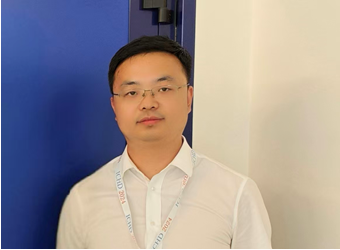 Ke Zeng, a Senior Engineer at the China Ship Scientific Research Center. He received his Bachelor’s degree in Naval Architecture and Ocean Engineering from Wuhan University of Technology and his PhD in Fluid Mechanics from the China Ship Research Center. His main research interests include CFD applications in ship hydrodynamics and ship stability in waves. He has undertaken more than 20 research projects, including high-technology ship research programs funded by the Ministry of Industry and Information Technology and projects supported by the Key Laboratory of Hydrodynamics, and has published over 30 academic papers. Ke Zeng, a Senior Engineer at the China Ship Scientific Research Center. He received his Bachelor’s degree in Naval Architecture and Ocean Engineering from Wuhan University of Technology and his PhD in Fluid Mechanics from the China Ship Research Center. His main research interests include CFD applications in ship hydrodynamics and ship stability in waves. He has undertaken more than 20 research projects, including high-technology ship research programs funded by the Ministry of Industry and Information Technology and projects supported by the Key Laboratory of Hydrodynamics, and has published over 30 academic papers.
Abstract:
At present, the International Maritime Organization (IMO) is continuously advancing its work on direct stability assessment within the framework of the Second Generation Intact Stability Criteria (SGISC), and accurate simulation and reproduction of stability failure motions in waves are a prerequisite for conducting such assessments. Using the ONR Tumblehome ship as the reference vessel, this talk focuses on dynamic stability phenomena in following and stern-quartering waves, including pure loss of stability, surf-riding, and periodic roll motion. The practical implementation of CFD methodologies for the simulation of these phenomena is presented. Particular attention is paid to the prediction accuracy of large-amplitude roll responses at different forward speeds, the differences between propeller representations based on the body-force method and discrete propeller model in reproducing instability phenomena, and the process characteristics of the large-amplitude rolling and capsizing triggered by these instability events.
Keynote Presentation 4 14:30-15:15
Research and Prospects of Arctic Ship Navigation: Ship Path Planning and Navigation Risk in Arctic Area
Prof. Yaqing Shu, Ningbo University, China
Brif CV of Invited Speaker:
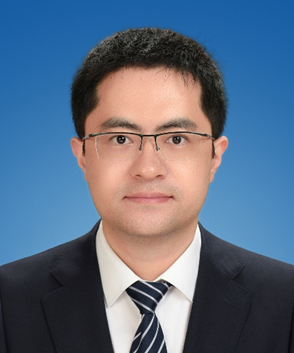 Yaqing Shu is currently working as a professor in Ningbo University, China. He finished his PhD in Delft University of Technology in 2019. Afterward, he joined Wuhan University of Technology as an Assistant Professor and was promoted to Associate Professor in 2020. He later conducted postdoctoral research at Liverpool John Moores University before joining Ningbo University in 2025. His research interests include intelligent ship navigation, maritime traffic risk, arctic shipping, and ship pollution. Dr. Shu hosted and participated in more than 30 research projects in recent years. He has published more than 80 SCI papers in high-quality journals and became a Stanford/Elsevier Top 2% Scientist 2024. In addition, he serves as the Executive Editor of Ocean & Coastal Management, the Deputy Editor of Ocean Engineering and Regional Studies in Marine Science. Yaqing Shu is currently working as a professor in Ningbo University, China. He finished his PhD in Delft University of Technology in 2019. Afterward, he joined Wuhan University of Technology as an Assistant Professor and was promoted to Associate Professor in 2020. He later conducted postdoctoral research at Liverpool John Moores University before joining Ningbo University in 2025. His research interests include intelligent ship navigation, maritime traffic risk, arctic shipping, and ship pollution. Dr. Shu hosted and participated in more than 30 research projects in recent years. He has published more than 80 SCI papers in high-quality journals and became a Stanford/Elsevier Top 2% Scientist 2024. In addition, he serves as the Executive Editor of Ocean & Coastal Management, the Deputy Editor of Ocean Engineering and Regional Studies in Marine Science.
Abstract:
With the development of Arctic shipping, ensuring safe, efficient, and environmentally friendly navigation for vessels in complex ice-covered environments has become a critical research focus. This study addresses key issues including ship navigation behavior, ship path planning in ice-covered waters, following models for ships, and emission characteristics. By integrating multi-source data analysis, mathematical modeling, and simulation-based evaluation, intelligent navigation optimization strategies have been developed to adapt to the highly variable ice conditions. The findings enhance the systemic understanding of Arctic vessel operations and provide theoretical foundations and technical pathways for decision support, intelligent control, and low-carbon strategies in ice-covered navigation. These contributions are of significant importance to the safety and sustainable development of future Arctic maritime transport.
Keynote Presentation 5 15:15-16:00
Application of Peridynamics in the Study of Polar Ship Rapidity
Prof. Chao Wang, College of Shipbuilding Engineering, Harbin Engineering University, China
Brief CV of Invited Speaker:
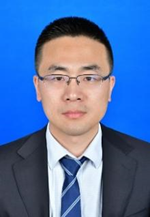 Wang Chao is a Professor and Doctoral Supervisor, serving as Vice Dean of the College of Shipbuilding Engineering at Harbin Engineering University (HEU). His primary research focuses on the prediction and analysis of ship performance in ice-covered regions, as well as ship propulsion efficiency and energy-saving technologies. Over the years, he has conducted extensive research addressing scientific challenges related to the hydrodynamic performance and structural reliability of ice-going vessel propulsion systems. As one of the early and systematic pioneers in the numerical and experimental methods for ice-class propellers internationally, he has led over 40 national and industry-funded projects, including key and general projects supported by the National Natural Science Foundation of China, fundamental scientific research initiatives, and technology enhancement programs. Focusing on ship powering performance research, he has authored four professional books, secured 50 patents, and published more than 150 scientific papers. Wang Chao is a Professor and Doctoral Supervisor, serving as Vice Dean of the College of Shipbuilding Engineering at Harbin Engineering University (HEU). His primary research focuses on the prediction and analysis of ship performance in ice-covered regions, as well as ship propulsion efficiency and energy-saving technologies. Over the years, he has conducted extensive research addressing scientific challenges related to the hydrodynamic performance and structural reliability of ice-going vessel propulsion systems. As one of the early and systematic pioneers in the numerical and experimental methods for ice-class propellers internationally, he has led over 40 national and industry-funded projects, including key and general projects supported by the National Natural Science Foundation of China, fundamental scientific research initiatives, and technology enhancement programs. Focusing on ship powering performance research, he has authored four professional books, secured 50 patents, and published more than 150 scientific papers.
Abstract:
Peridynamics (PD) is a non-local, meshless Lagrangian method fundamentally adept at simulating discontinuous problems, such as fracture and fragmentation, without the need for special crack-tracking techniques. Its intrinsic capability to naturally model the initiation and propagation of multiple cracks makes it particularly advantageous for addressing the complex ice-structure interaction problems central to polar ship rapidity. These challenges in the research involve the failure mode of ice, dynamic contact, and the resulting fluid-structure interactions that critically impact ship resistance and propeller performance. This presentation will focus on the application of the PD framework to analyze the polar ship rapidity. It will begin with an overview of the research background for polar ship operations. Subsequently, the core theory of PD and its essential validations will be introduced. Then the PD-X coupled methodology will be presented, which integrates PD for ice failure with other solvers for fluid dynamics. Following this, the application of PD in studying polar ship resistance, specifically for ship-ice interaction and breaking, will be demonstrated. The talk will also cover its use in polar propeller research, such as simulating ice-propeller contact and its impact on propulsion efficiency and structural loads. Finally, the presentation will conclude with a perspective on future research directions, highlighting the potential of PD to become a vital component in the simulation-based design tools for polar maritime engineering.
Keynote Presentation 6 16:00-16:45 (Jan. 18, 08:00-08:45 UK Time)
Multiphysics CFD Analysis of a Flexible Oscillating Water Column Wave Energy Converter with a Dielectric Elastomer Membrane
Dr Yang Huang, Research Associate, University of Strathclyde, UK
Brief CV of Invited Speaker:
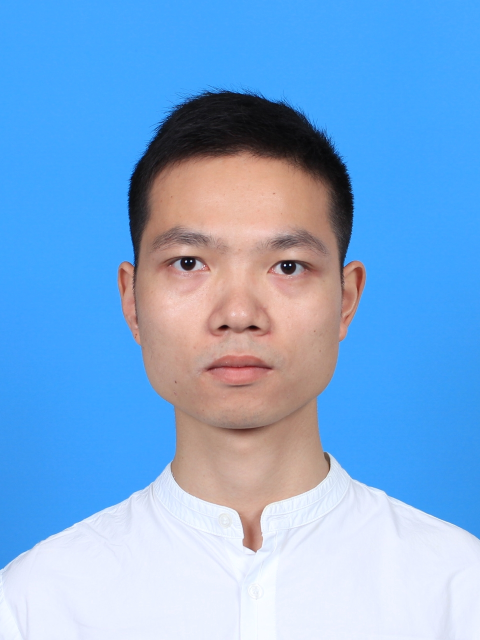 Dr Yang Huang received his PhD from Shanghai Jiao Tong University and is currently a Research Associate at the University of Strathclyde, UK. His research focuses on fluid–structure interaction and multiphysics coupling in flexible wave energy converters and floating offshore wind turbine systems. His work addresses the coupled dynamic responses of offshore renewable energy devices subjected to complex wind-wave loading in deep and far-offshore environments. In particular, he is interested in high-fidelity numerical modelling, multiphysics coupling mechanisms, and performance-oriented design optimisation of flexible marine energy systems. He has developed advanced computational frameworks and high-fidelity coupled models to investigate fluid-structure-electric interactions in next-generation wave energy converters. Dr Huang’s research contributes to the development of reliable and efficient offshore renewable energy technologies, with potential applications in long-duration ocean monitoring, autonomous offshore systems, and remote marine infrastructures requiring stable and sustainable energy supply. Dr Yang Huang received his PhD from Shanghai Jiao Tong University and is currently a Research Associate at the University of Strathclyde, UK. His research focuses on fluid–structure interaction and multiphysics coupling in flexible wave energy converters and floating offshore wind turbine systems. His work addresses the coupled dynamic responses of offshore renewable energy devices subjected to complex wind-wave loading in deep and far-offshore environments. In particular, he is interested in high-fidelity numerical modelling, multiphysics coupling mechanisms, and performance-oriented design optimisation of flexible marine energy systems. He has developed advanced computational frameworks and high-fidelity coupled models to investigate fluid-structure-electric interactions in next-generation wave energy converters. Dr Huang’s research contributes to the development of reliable and efficient offshore renewable energy technologies, with potential applications in long-duration ocean monitoring, autonomous offshore systems, and remote marine infrastructures requiring stable and sustainable energy supply.
Abstract:
Flexible wave energy converters (FlexWECs) offer a promising alternative to rigid devices for operation in harsh marine environments. In particular, oscillating water column (OWC) systems integrated with dielectric elastomer generators (DEGs) enable simplified structures and direct wave-to-electric energy conversion. However, the coupled interactions between fluid dynamics, structural deformation, and electric fields introduce complex multiphysics behaviour that remains poorly understood. This study proposes a high-fidelity computational framework to investigate the fully coupled fluid-structure-electric (FSE) response of a flexible OWC wave energy converter equipped with a dielectric elastomer membrane. The model is validated against experimental data, showing good agreement in predicting membrane deformation under combined hydrodynamic and electrostatic loading. Parametric simulations under regular wave excitation reveal that electric excitation effectively reduces membrane stiffness, leading to increased deformation and elevated stress levels, particularly near the membrane centre and edges. A secondary deformation mode is also observed during the near-flat phase of motion. Furthermore, increasing the initial voltage results in an approximately quadratic increase in electrical power output. The results provide new physical insights into multiphysics coupling mechanisms in flexible OWC wave energy converters and offer guidance for the design and optimisation of next-generation wave energy harvesting systems.
Keynote Presentation 7 16:45-17:30 (Jan. 18, 08:45-09:30 UK Time)
High Fidelity CFD for Ship Manoeuvrability and Autonomous Navigation in Realistic Sea Conditions
Prof. Tahsin Tezdogan, Professor of Marine Hydrodynamics, University of Southampton, UK
Brief CV of Invited Speaker:
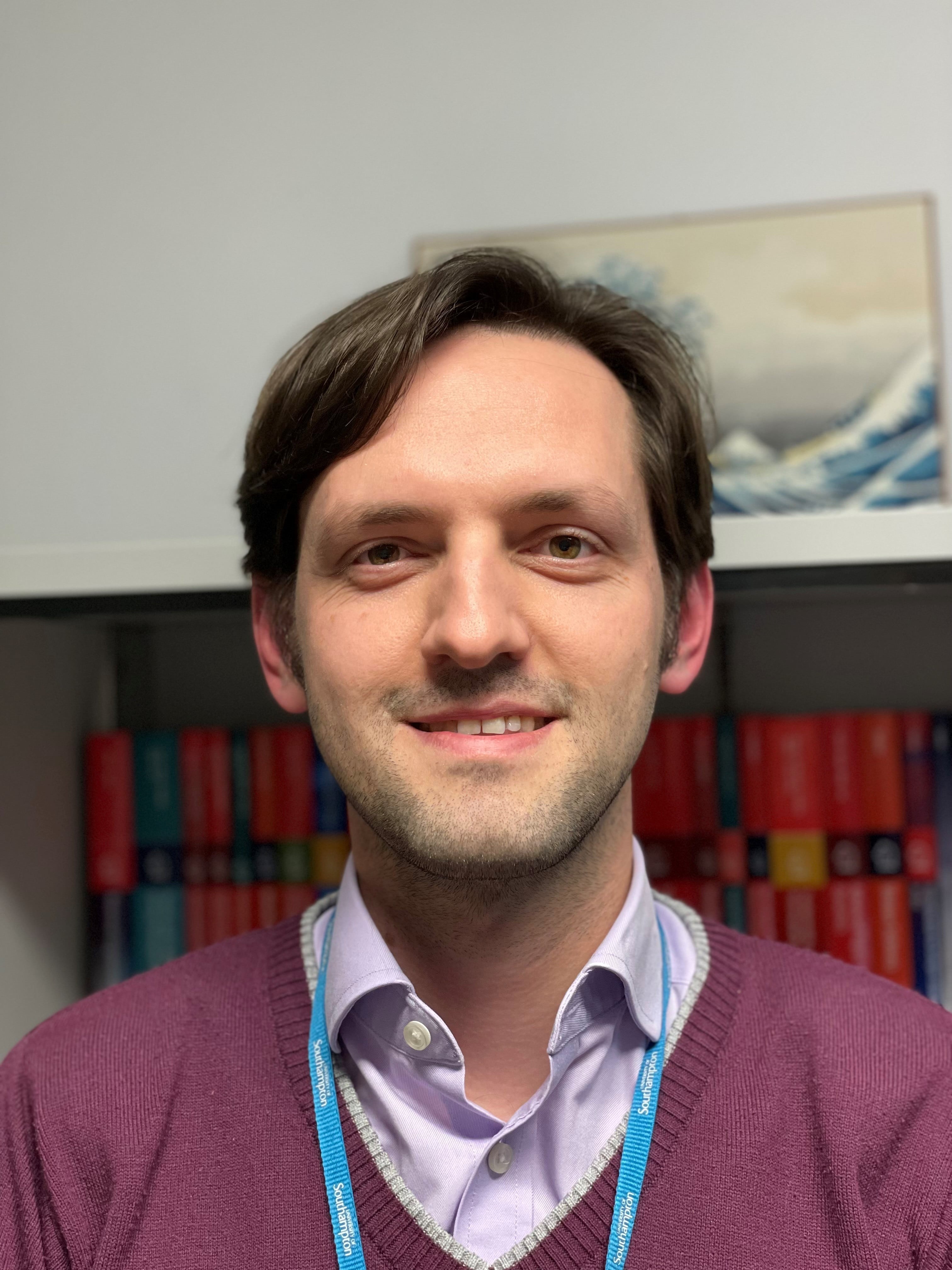 Professor Tahsin Tezdogan is Professor of Marine Hydrodynamics at the University of Southampton, where he also serves as Director of MSc Admissions and Strategy within the School of Engineering. He is internationally recognised for his contributions to numerical marine hydrodynamics, particularly in the development and application of high fidelity Computational Fluid Dynamics methods for complex ship and offshore hydrodynamics problems. His research spans ship manoeuvrability, seakeeping, ship resistance and propulsion, shallow water hydrodynamics, maritime decarbonisation, optimisation based design, and the hydrodynamics of renewable energy devices. Professor Tezdogan has authored more than ninety peer reviewed journal papers and a large body of conference contributions. His work has been widely cited within the marine engineering community and includes several highly influential publications on unsteady RANS simulations for ship motions and manoeuvring, CFD models for propulsion failure scenarios, nonlinear path following control under wave disturbances, and hydrodynamic performance prediction in irregular and extreme sea states. His research has also made notable contributions to shallow water dynamics, hull roughness effects, hydroelasticity, and optimisation of both conventional and high-performance vessels. He has supervised ten PhD students to completion and continues to lead research at the interface of numerical modelling, autonomy, and sustainable maritime technology. His research portfolio includes leadership and co leadership roles on numerous national and international projects. These include Innovate UK funded work on wind assisted ship propulsion and AI enabled vessel design, a major Clean Maritime Challenge collaboration with a defence company, and European funded programmes on next generation propulsion systems, maritime logistics, and renewable energy concepts. He has also contributed to industry focused studies ranging from car ferry operability to hydrodynamic benchmarking, offshore energy devices, and canal and confined water operations. Professor Tezdogan is co Editor in Chief of Ocean Engineering, one of the leading journals in the field, where he oversees scholarly standards and editorial strategy. He also serves on editorial boards of several journals and is an active reviewer and evaluator for major funding bodies including EPSRC, ESF, FWO, FCT, and national research councils across Europe and Asia. His expertise has been recognised through multiple distinctions, including listing in the Stanford Elsevier top two percent of scientists, recognition by ScholarGPS for research excellence in computational fluid dynamics, and international awards for research contributions. Before joining Southampton in 2023, he held academic posts at the University of Strathclyde and began his career at Istanbul Technical University. He holds a PhD from the University of Strathclyde and MSc and BSc degrees from Istanbul Technical University. Professor Tahsin Tezdogan is Professor of Marine Hydrodynamics at the University of Southampton, where he also serves as Director of MSc Admissions and Strategy within the School of Engineering. He is internationally recognised for his contributions to numerical marine hydrodynamics, particularly in the development and application of high fidelity Computational Fluid Dynamics methods for complex ship and offshore hydrodynamics problems. His research spans ship manoeuvrability, seakeeping, ship resistance and propulsion, shallow water hydrodynamics, maritime decarbonisation, optimisation based design, and the hydrodynamics of renewable energy devices. Professor Tezdogan has authored more than ninety peer reviewed journal papers and a large body of conference contributions. His work has been widely cited within the marine engineering community and includes several highly influential publications on unsteady RANS simulations for ship motions and manoeuvring, CFD models for propulsion failure scenarios, nonlinear path following control under wave disturbances, and hydrodynamic performance prediction in irregular and extreme sea states. His research has also made notable contributions to shallow water dynamics, hull roughness effects, hydroelasticity, and optimisation of both conventional and high-performance vessels. He has supervised ten PhD students to completion and continues to lead research at the interface of numerical modelling, autonomy, and sustainable maritime technology. His research portfolio includes leadership and co leadership roles on numerous national and international projects. These include Innovate UK funded work on wind assisted ship propulsion and AI enabled vessel design, a major Clean Maritime Challenge collaboration with a defence company, and European funded programmes on next generation propulsion systems, maritime logistics, and renewable energy concepts. He has also contributed to industry focused studies ranging from car ferry operability to hydrodynamic benchmarking, offshore energy devices, and canal and confined water operations. Professor Tezdogan is co Editor in Chief of Ocean Engineering, one of the leading journals in the field, where he oversees scholarly standards and editorial strategy. He also serves on editorial boards of several journals and is an active reviewer and evaluator for major funding bodies including EPSRC, ESF, FWO, FCT, and national research councils across Europe and Asia. His expertise has been recognised through multiple distinctions, including listing in the Stanford Elsevier top two percent of scientists, recognition by ScholarGPS for research excellence in computational fluid dynamics, and international awards for research contributions. Before joining Southampton in 2023, he held academic posts at the University of Strathclyde and began his career at Istanbul Technical University. He holds a PhD from the University of Strathclyde and MSc and BSc degrees from Istanbul Technical University.
Abstract:
Ship manoeuvrability in realistic environmental conditions remains a central challenge in modern naval architecture, particularly as the industry advances towards low emission operations and maritime autonomous surface ships. This keynote synthesises findings from a series of published studies that employ fully nonlinear unsteady Reynolds Averaged Navier Stokes simulations to investigate ship behaviour in complex conditions including regular, irregular, and adverse waves, currents, and low speed regimes. The presentation outlines validated free running CFD models capable of resolving hull, propeller, and rudder interactions for the KRISO Container Ship. These models are applied to characterise course keeping, turning circle performance, zigzag manoeuvres, and path following tasks across a wide range of wave directions and heights. Results from simulations in waves demonstrate substantial changes in manoeuvring characteristics relative to calm water, with irregular seas producing the greatest deviations. Complementary studies show that ocean currents significantly alter turning trajectories and that sudden propulsion loss leads to notable increases in advance, especially in moderate wave heights. Recent work extends these CFD based manoeuvring models to autonomous navigation by integrating guidance laws such as Line of Sight control within the RANS framework. These developments enable accurate prediction of path following capability under wave disturbances and allow assessment of low speed operation relevant to minimum propulsion power guidelines. Together, these studies demonstrate that high fidelity CFD provides a robust and comprehensive approach to predicting ship manoeuvrability and autonomous navigation performance under realistic operating conditions. The findings contribute to improved understanding of navigational safety, support the development of autonomous control algorithms, and offer insights relevant to regulatory discussions on minimum powering, energy efficiency, and operational safety.
7.会议秘书(Secretariat of the 9th CMHL Symposium)
Dr. Liushuai Cao, CMHL, Shanghai Jiao Tong University, Email: liushuaicao@sjtu.edu.cn
Dr. Yuan Zhuang, CMHL, Shanghai Jiao Tong University, Email: nana2_0@sjtu.edu.cn
Dr. Zheng Ma, Editorial Board, Journal of Hydrodynamics (JHD), Email: mazh8888@sina.com
Mr. Wei Liu, China Ship Scientific Research Center (CSSRC), Email: liuwei@cssrc.com.cn
Prof. Yaqing Shu, Ningbo University, Email: shuyaqing@nbu.edu.cn
|